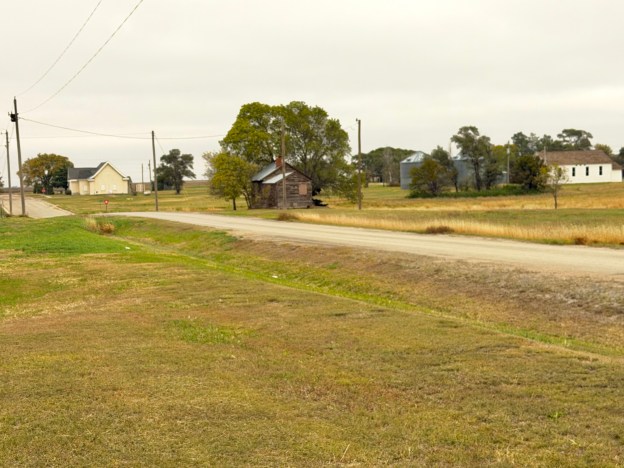
So many rural towns across the Great Plains have steadily lost population over the last 100 years. Nicodemus, a tiny town of a little more than a dozen of residents in northwest Kansas, is just another example. But it’s different from most places because of its origins as an urban center for the Black western colony movement of the 1870s and 1880s.
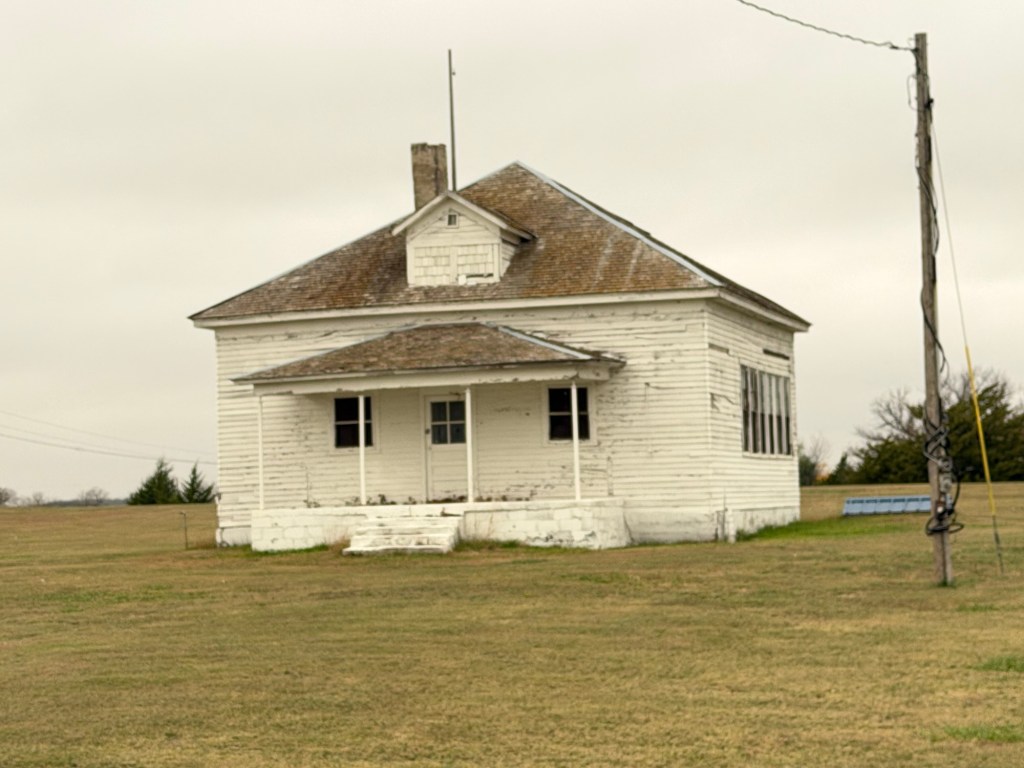
Benjamin Singleton of Tennessee, among others, had promoted the idea of African Americans leaving the increasingly fraught “Jim Crow” South and moving to Kansas and taking advantage of the Homestead Act to claim land. Promoters established the town of Nicodemus in 1877, with many of the first settlers coming from Kentucky. A second wave of settlers came from other parts of the South and by the early 1880s, the town entered its most prosperous era. But the prosperity did not last long, with the impact of the Depression of 1893 and the Great Depression of the 1930s sapping the town of residents and businesses. By the mid-20th century, it was almost a ghost town. The post office closed in 1953 and the school was shuttered in 1961.
Those who remained, and the descendants of those who left, refused to let the town disappear. Annual summer reunions in the 1970s brought renewed interest in Nicodemus’s history and that interest led to the formation of the Nicodemus Historical Society. In 1976, the Secretary of Interior declared Nicodemus as a National Historic Landmark.
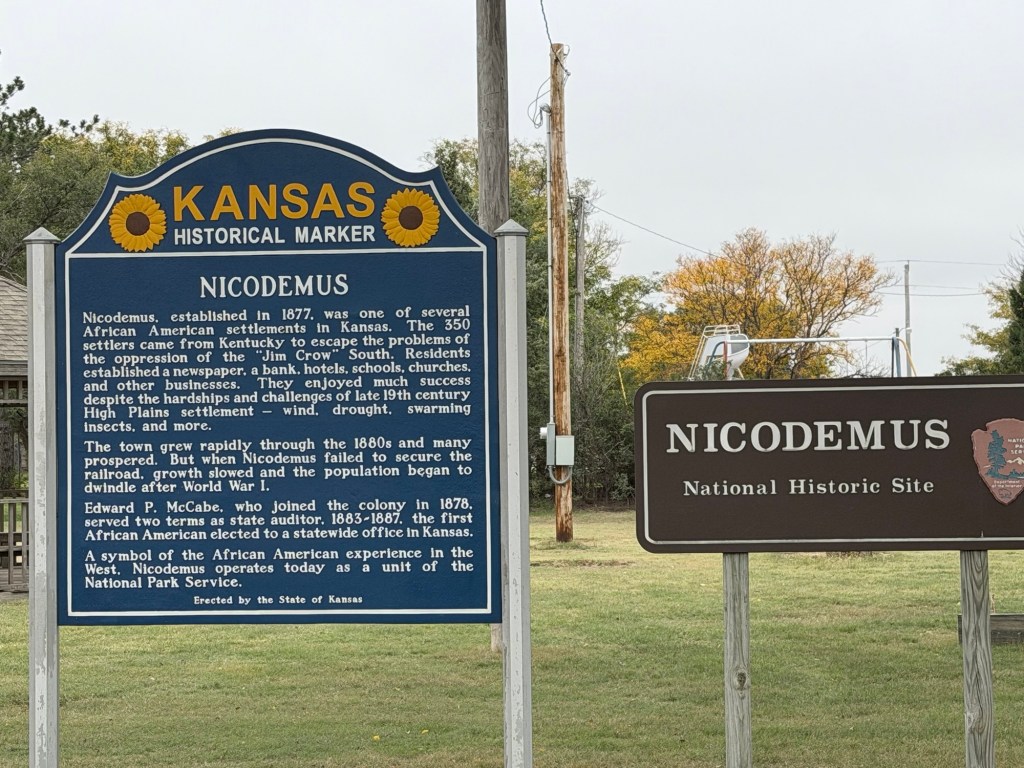
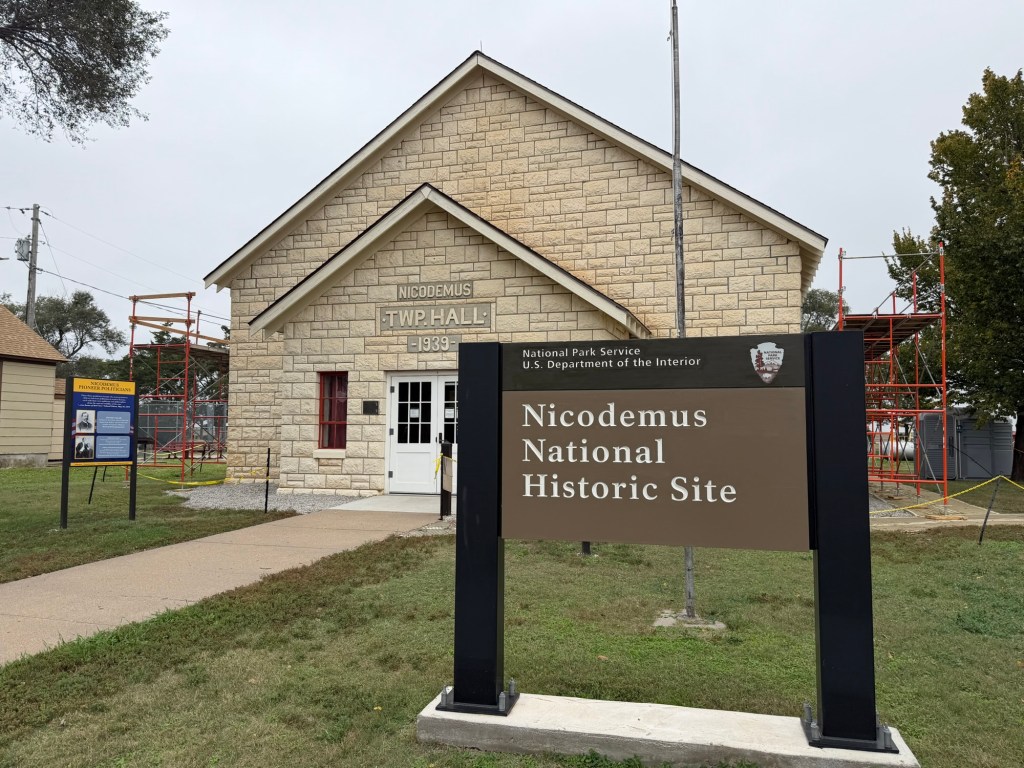
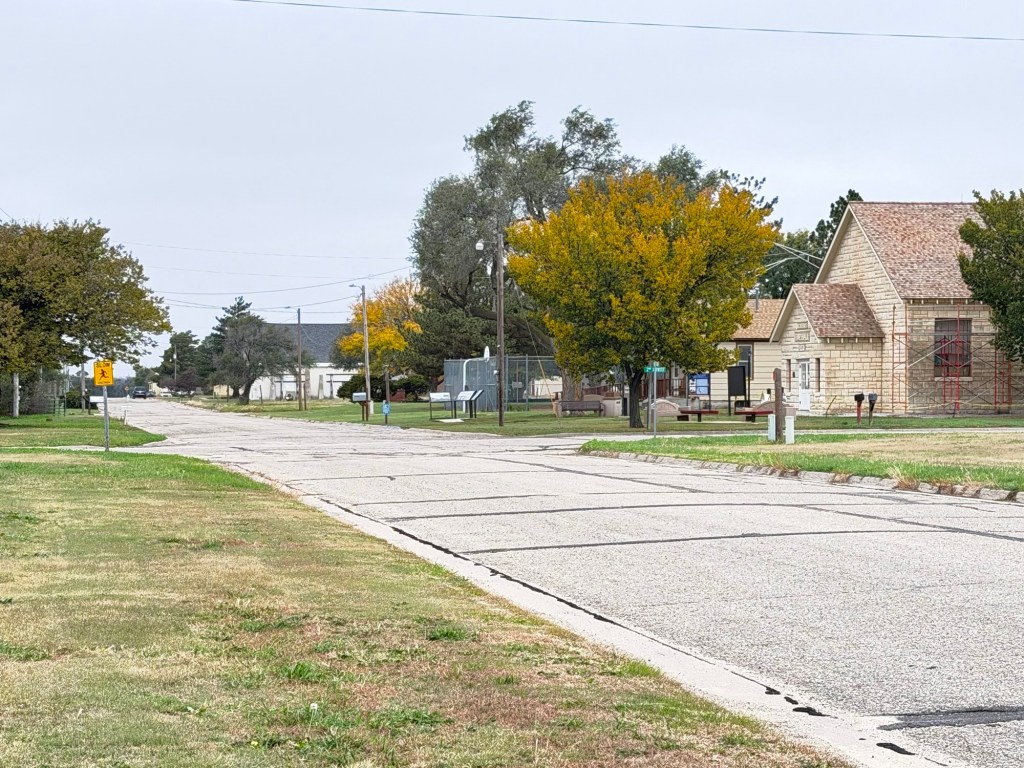
Today, the National Park Service administers several properties as a national historic site, centered on the town’s township hall, which was built during the New Deal.
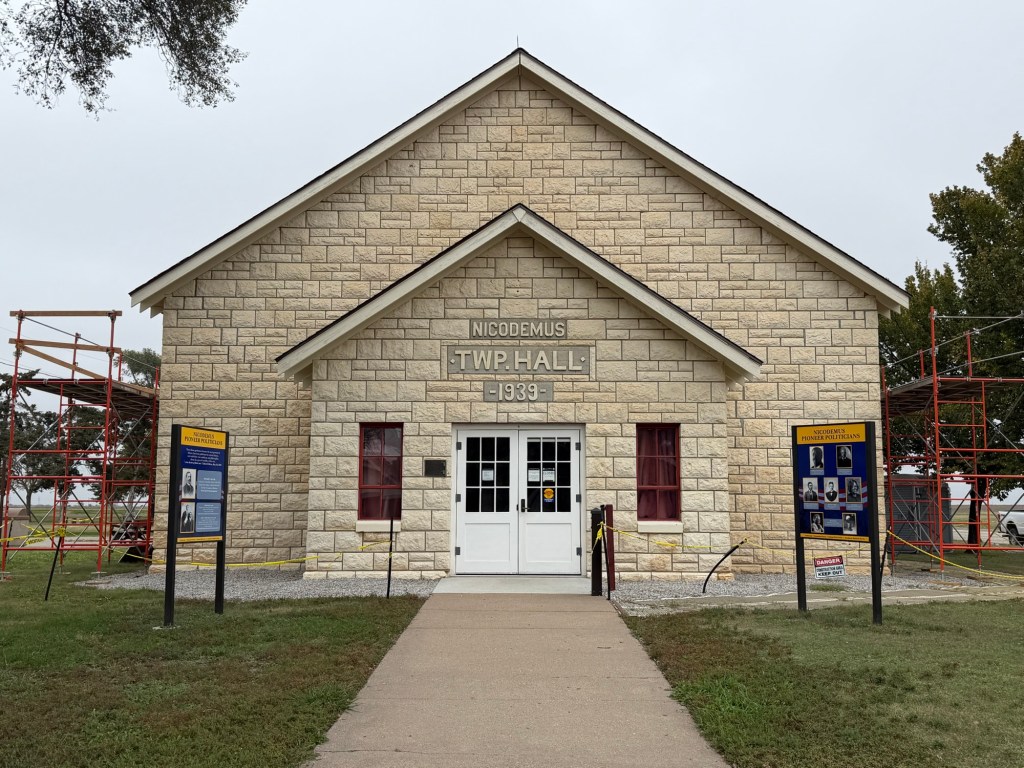
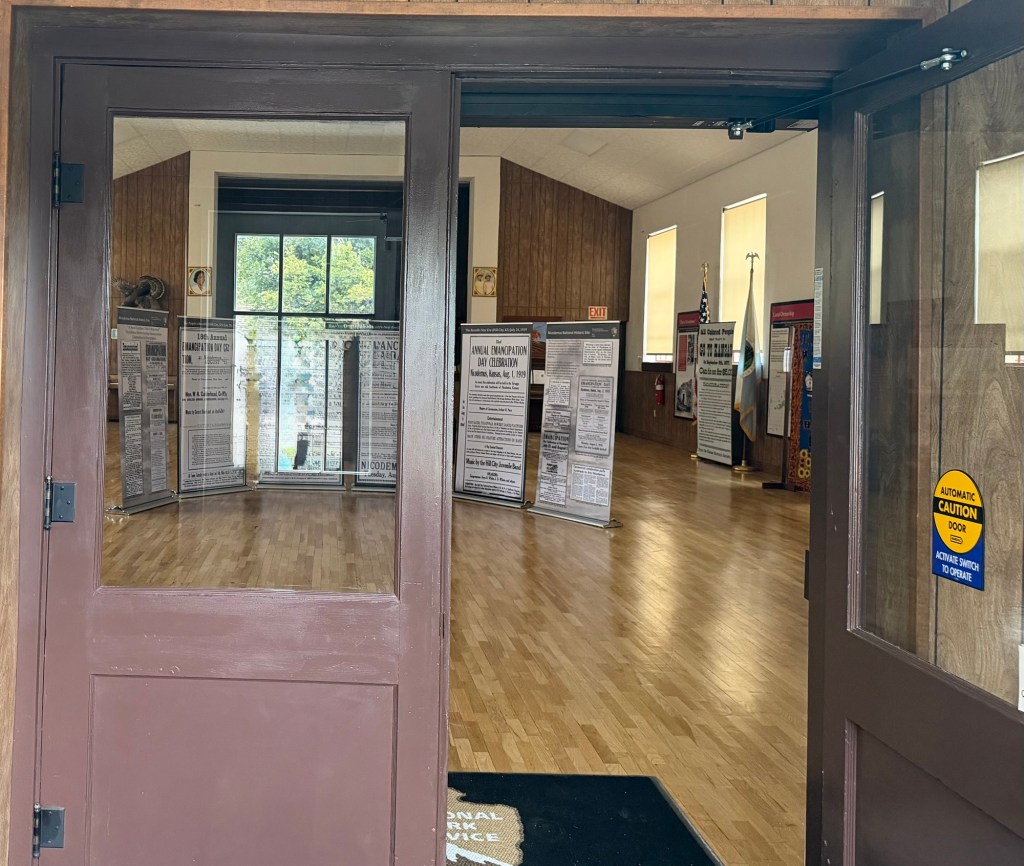
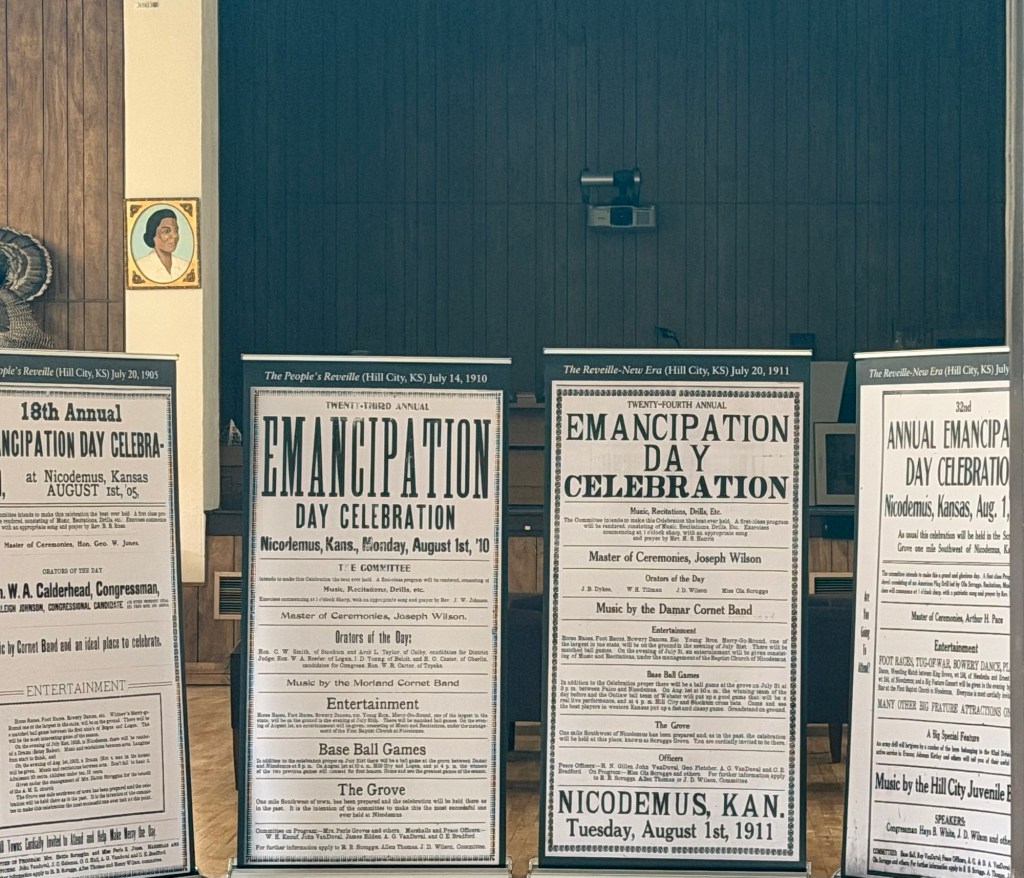
As the two photos above show, the interior is like it was 80 years ago—an open space with a large stage. The park service has placed several interpretive panels that emphasize themes in the town’s history in the hall. The building itself showcases the tradition of stone craftsmanship, not just at Nicodemus but in the larger region.
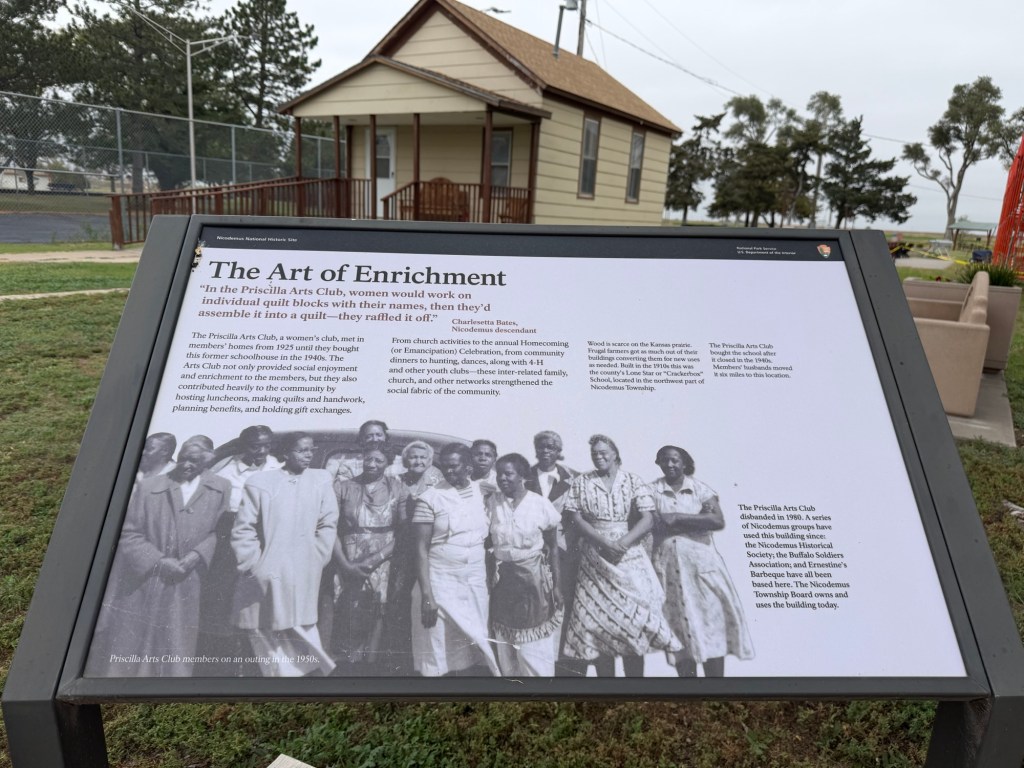
The best way to explore remaining historic buildings is a well-interpreted walking tour, starting with the Priscilla Arts Club, which stands next to the fellowship hall.
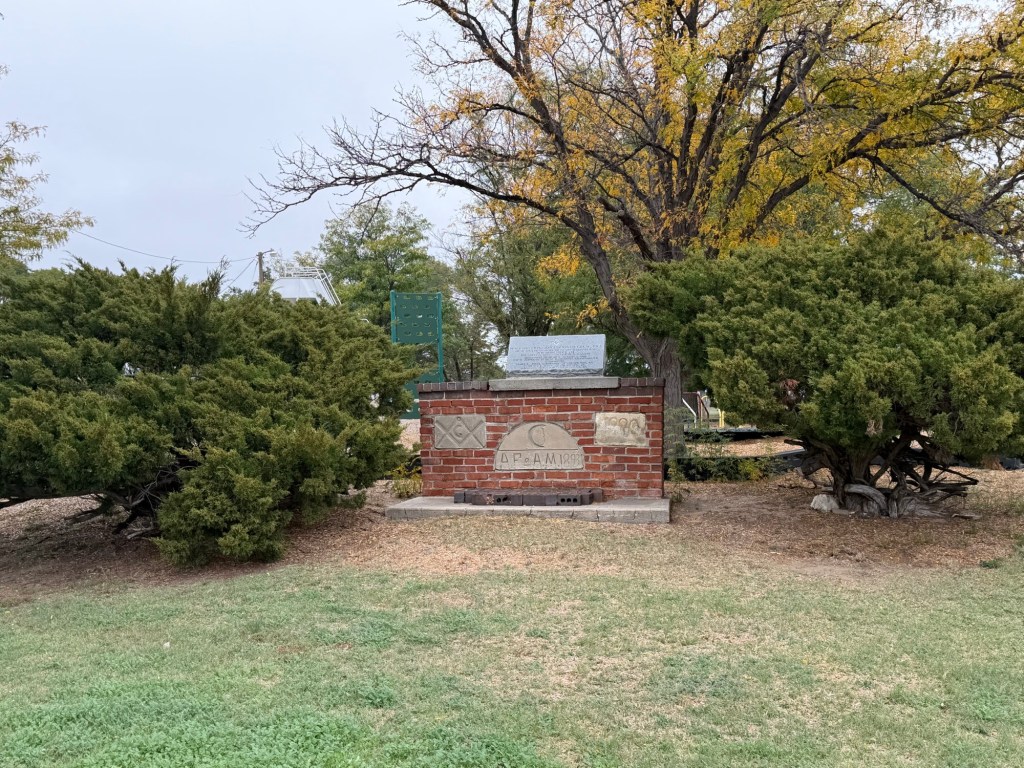
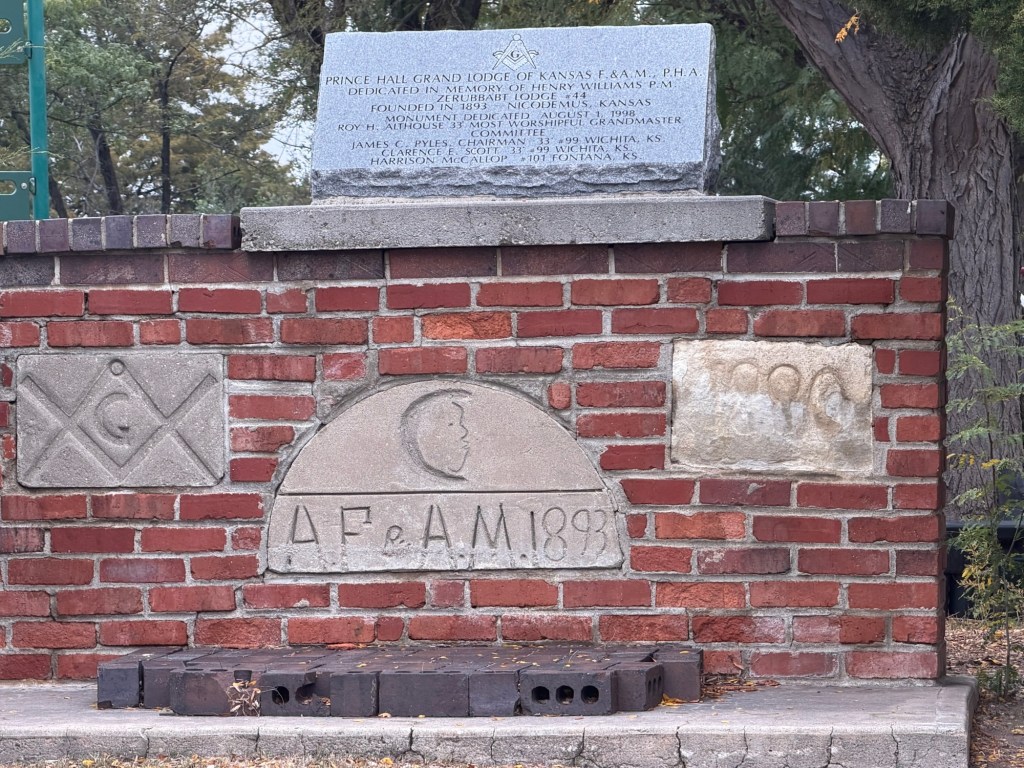
Next comes a memorial to the Masonic Hall that once stood at the corner. Fraternal lodges were vital to community development in the plains.
Across the street is a historic dwelling, whose stone wall has failed. Obviously the site needs a greater federal appropriation to preserve the remaining historic buildings.
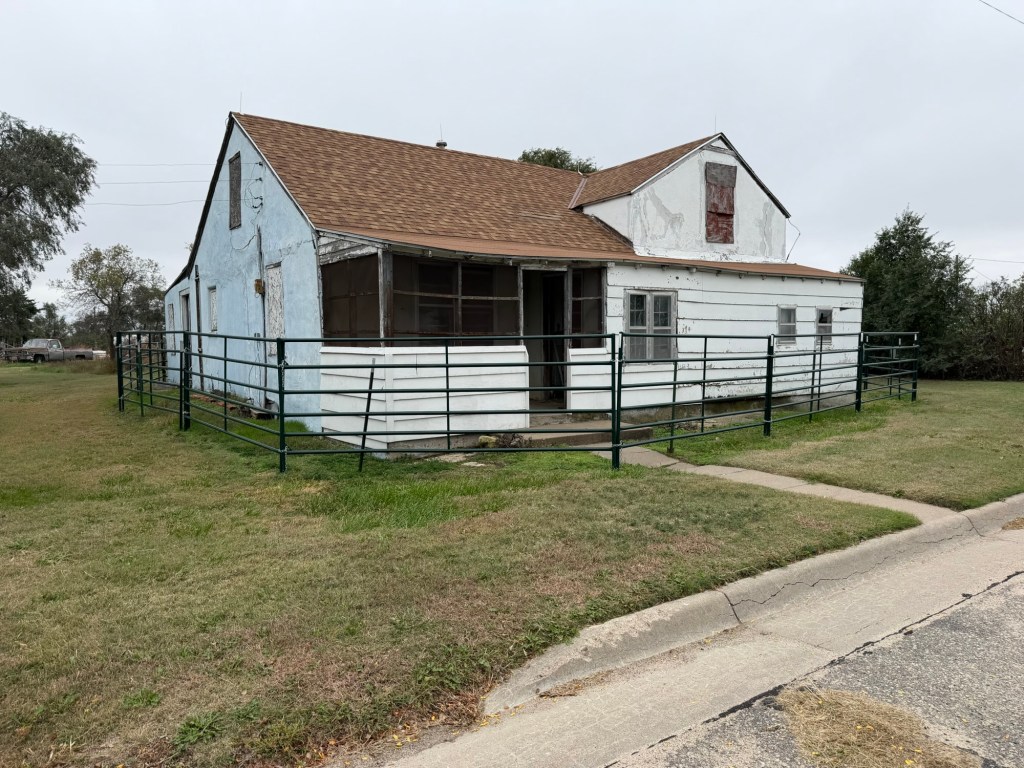
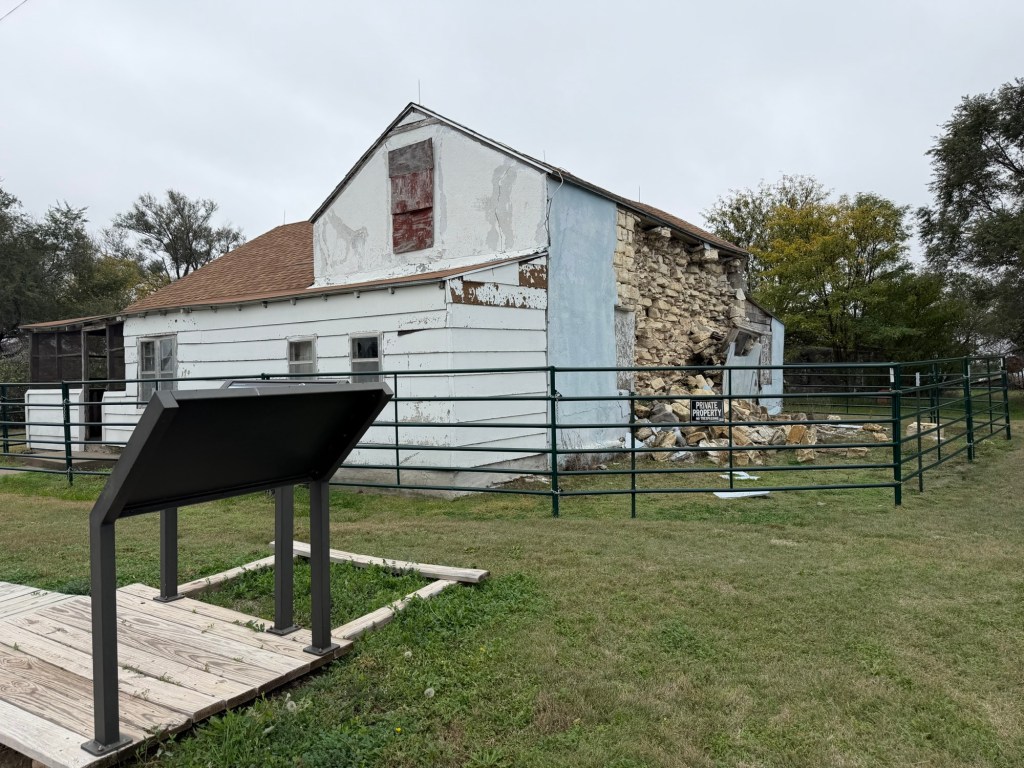
The need is particularly obvious at the historic First Baptist Church, which is closed to the public. It was a grand Victorian-styled building, although it has lost its steeple over the years. The congregation is still active, holding services at an adjacent building.
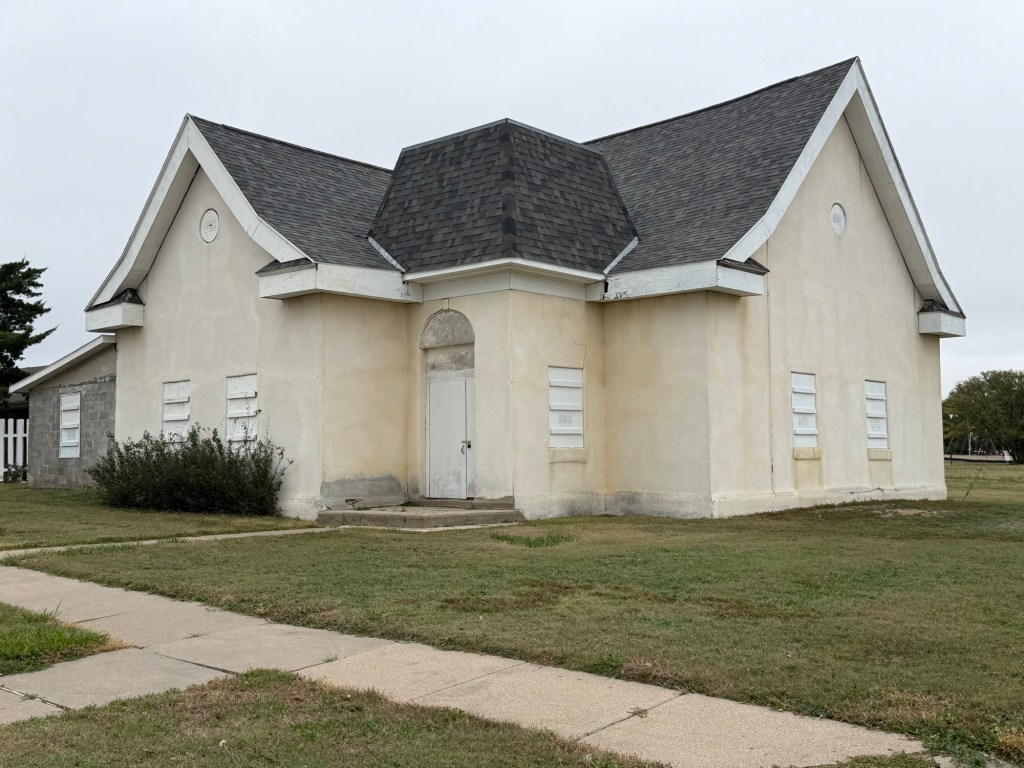
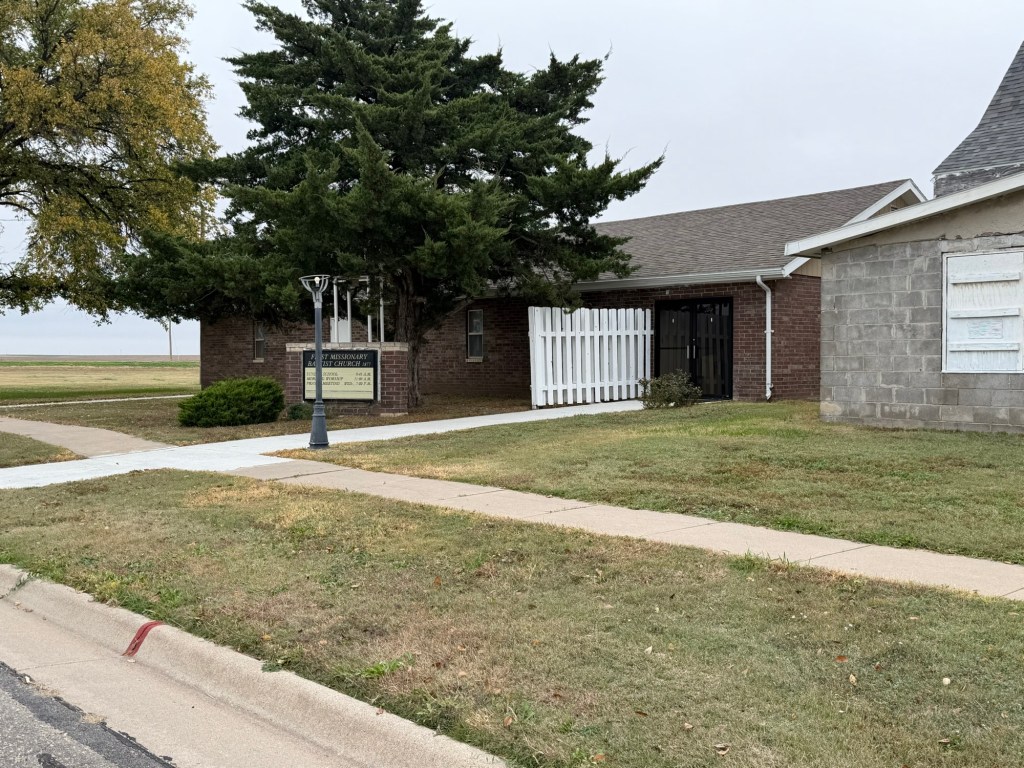
The National Park Service has worked with members of the town’s AME church to restore and periodically open to the public the historic AME Church, one of the town’s oldest buildings.
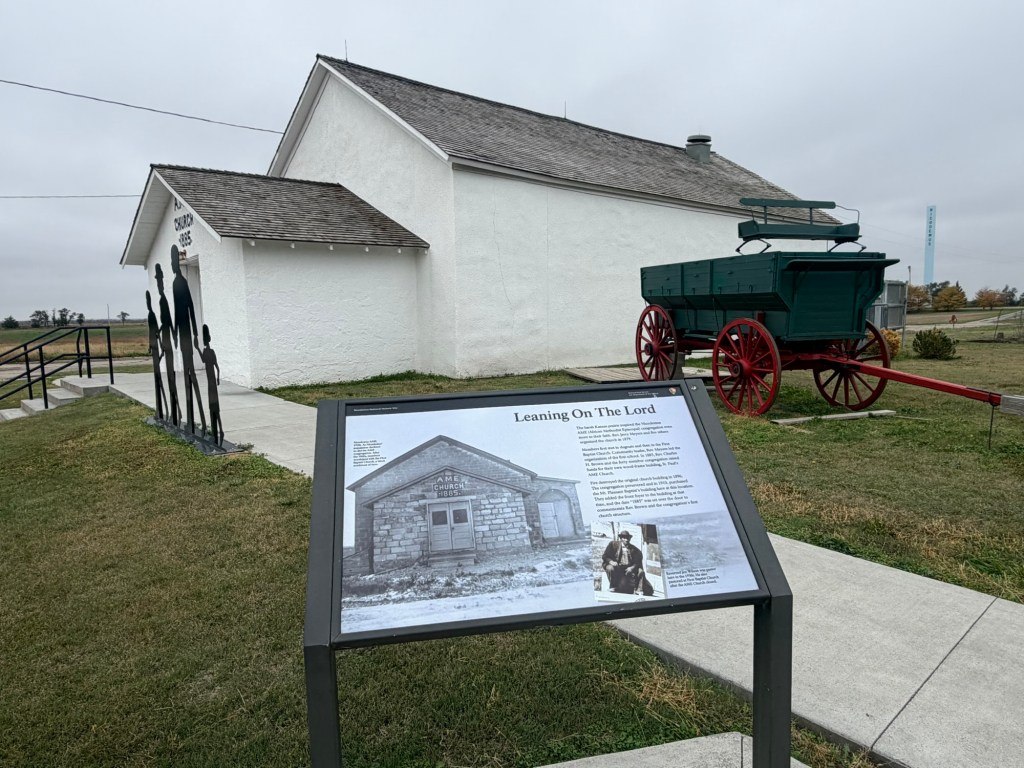
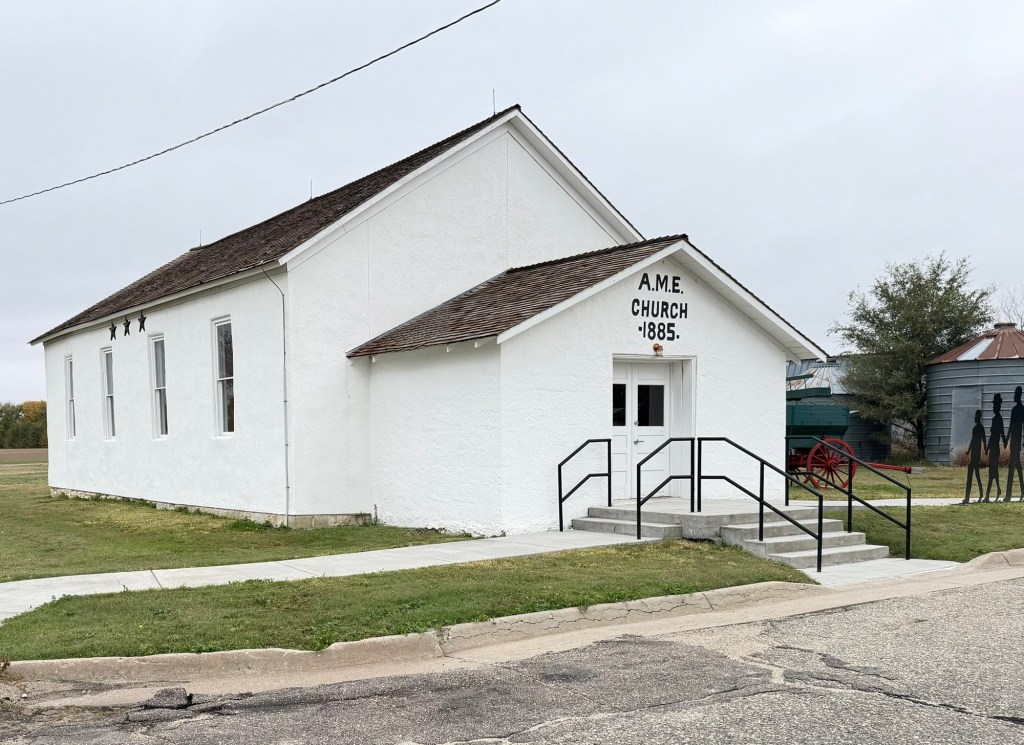
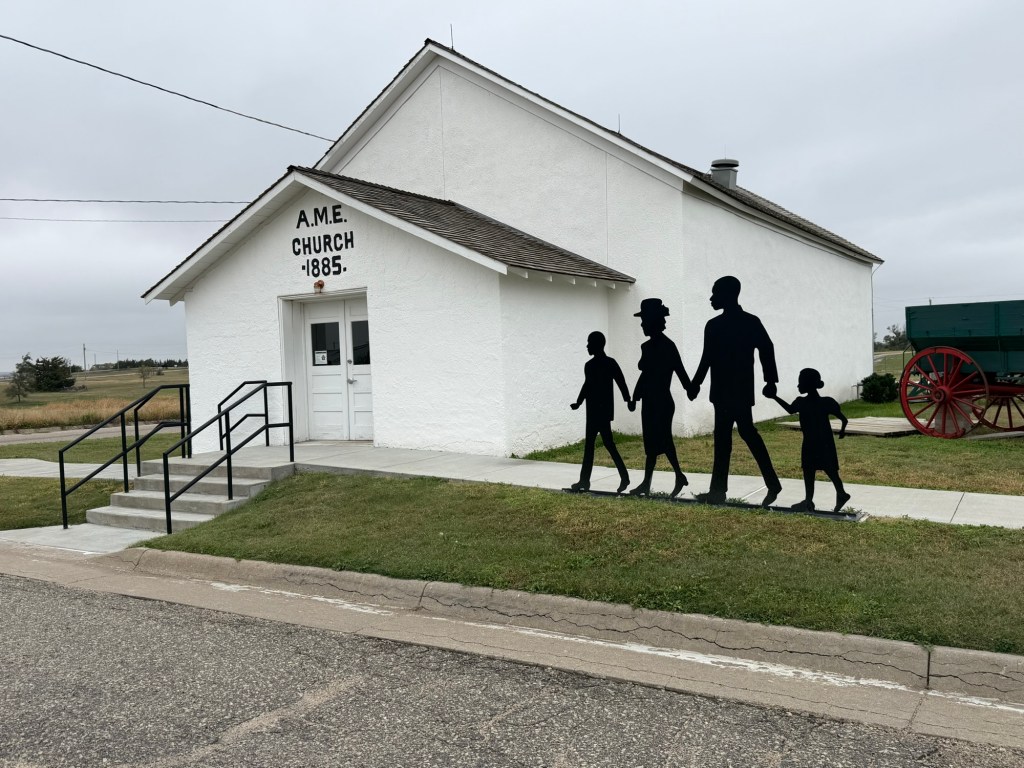
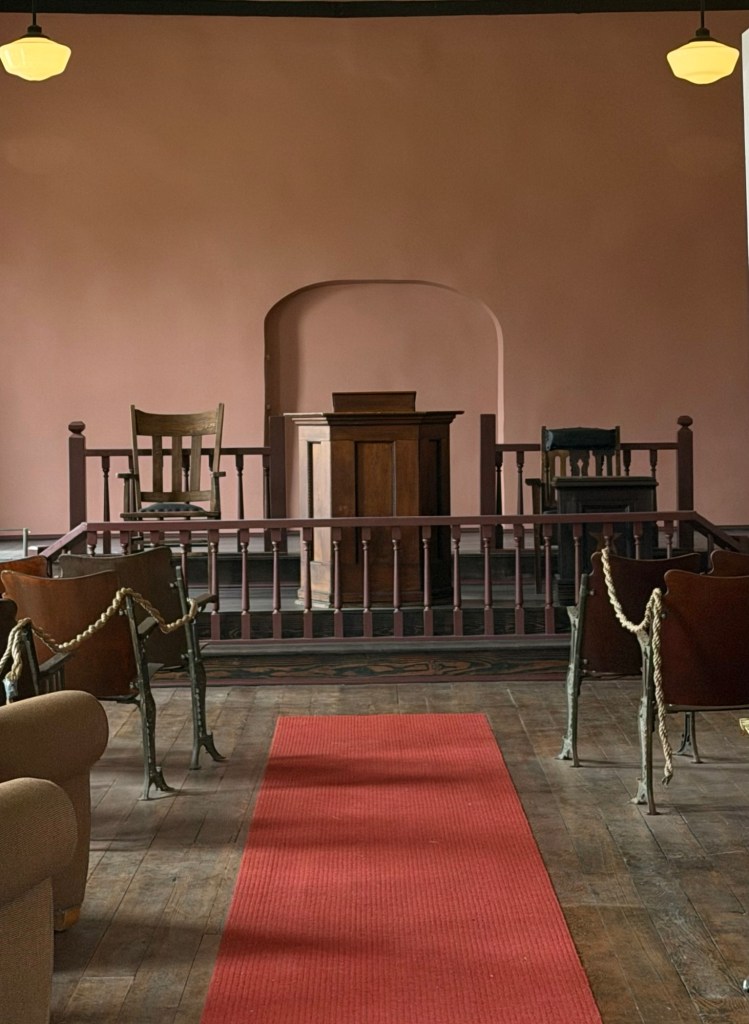
It’s impossible to over-emphasize the importance of the church in rural communities. Nicodemus has lost much of its building fabric but the two surviving churches are a foundation for future interpretation and restoration.
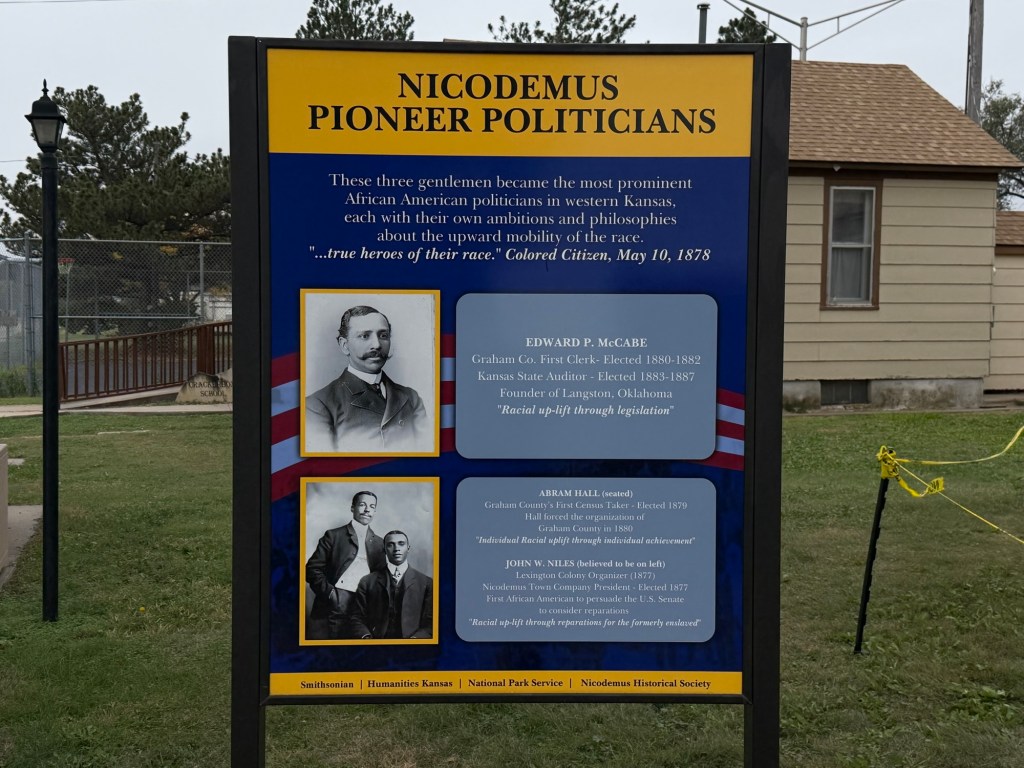
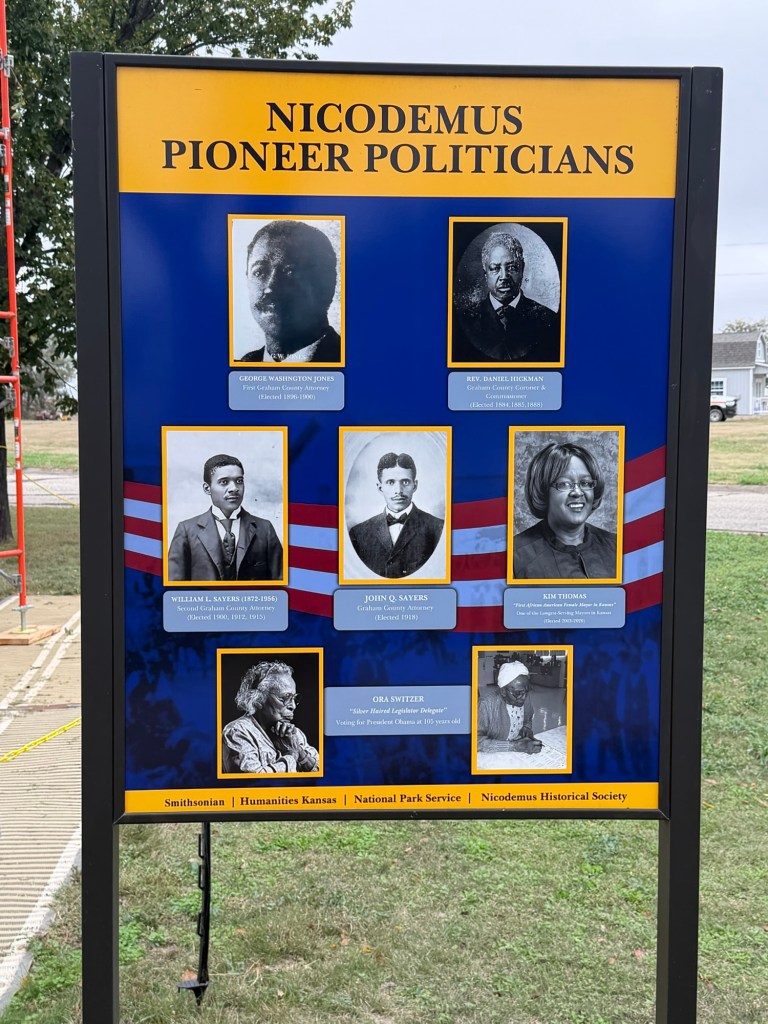
Other partners in the town’s preservation, led by the Nicodemus Historical Society and including the Smithsonian and the state humanities council, add to the layers of story-telling with several interpretive panels. The two above are at township hall.
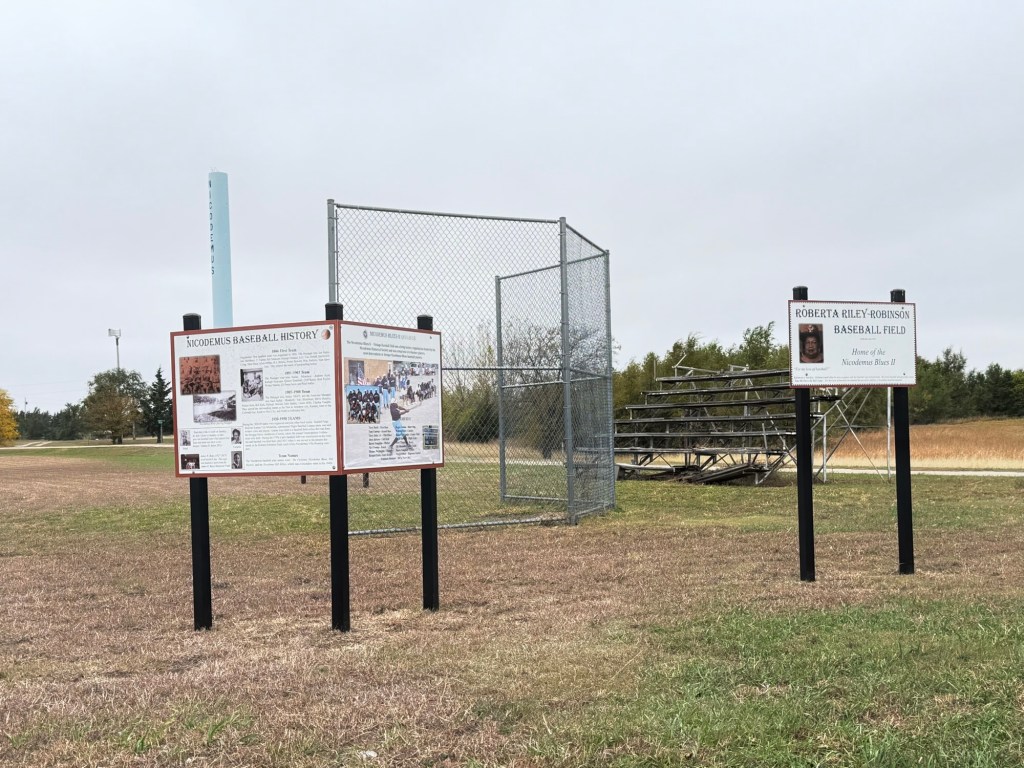
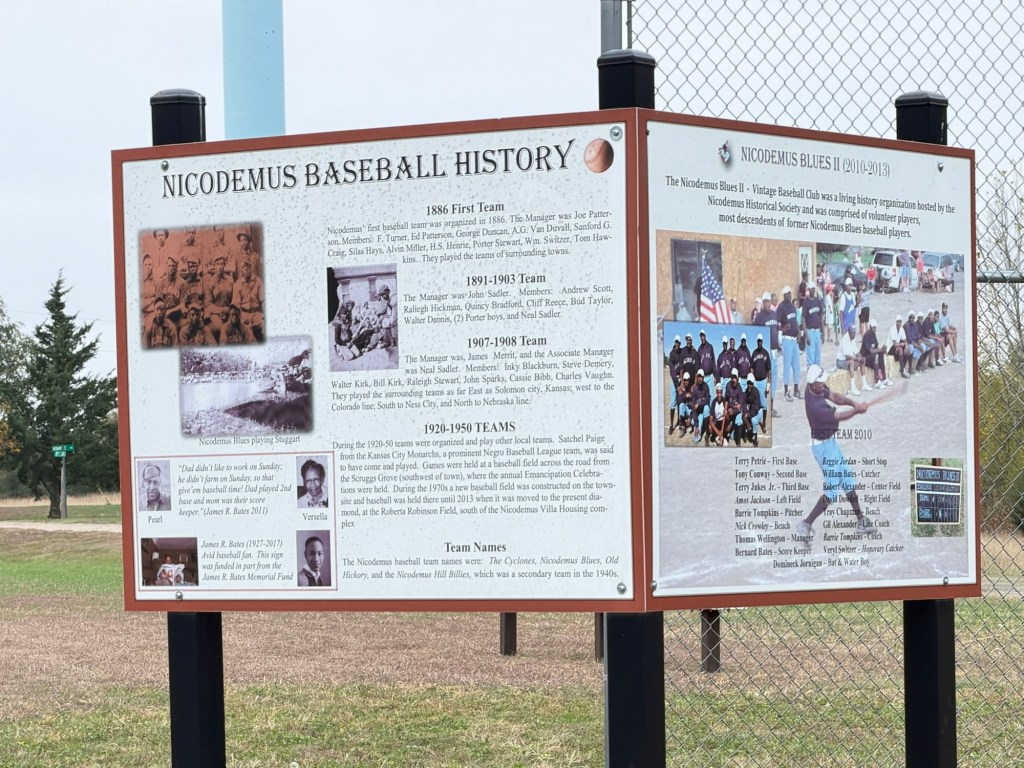
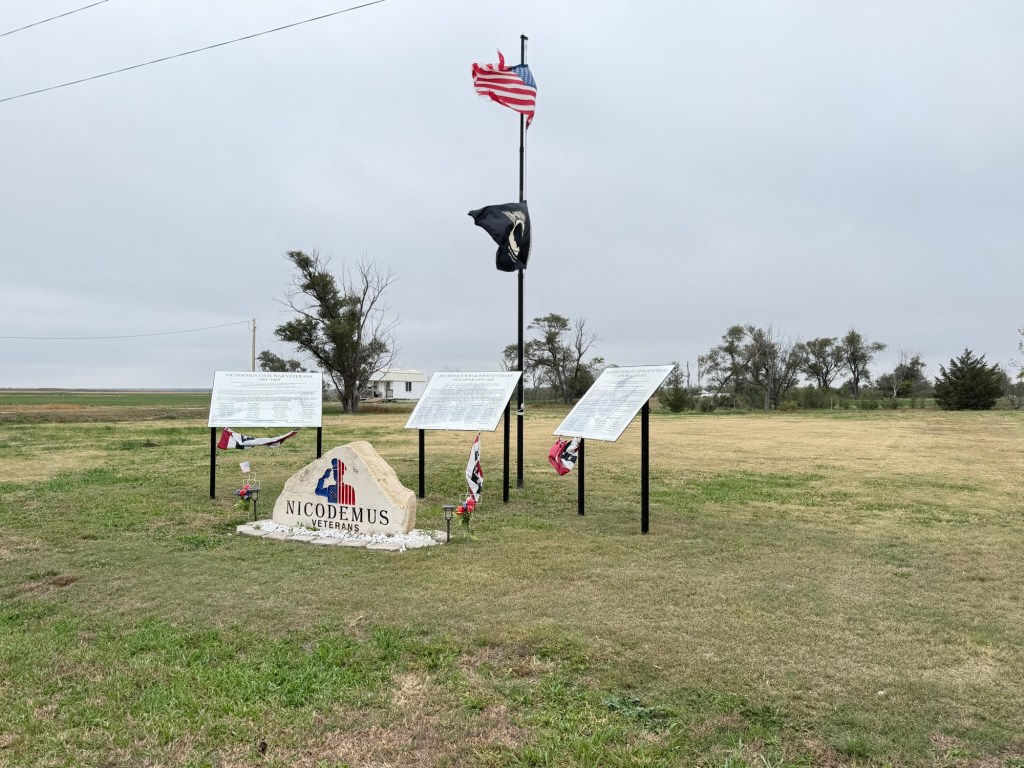
At the town park, the Nicodemus Historicsl Society shares the settlement’s baseball history from the 1880s to 1950. At the eastern end of town the historical society installed a veterans memorial for residents who fought for the United States from the Civil war to the Vietnam war.
Nicodemus is a fascinating rural landscape. Coming from the west there is little prompting about the ate and its significance along the federal highway. That’s unfortunate because the surviving buildings, places, and robust public interpretation certain tell a story of community building worth exploring and understanding.

